
Rubber is a family of opaque thermoplastic resins formed by copolymerization of ACRY-acrylonitrile, butadiene and styrene monomers. Rubber is highly resistant to high stiffness or modulus is particularly significant. ABS resin is hard, rigid, tough, even at low temperatures, by particles of a rubbery toughening agent suspended in the continuous phase of a styrene-acrylonitrile (SAN) copolymer. These amorphous, medium priced thermoplastic grades provide varying degrees of impact strength, heat resistance, flame retardant dance, and plating.
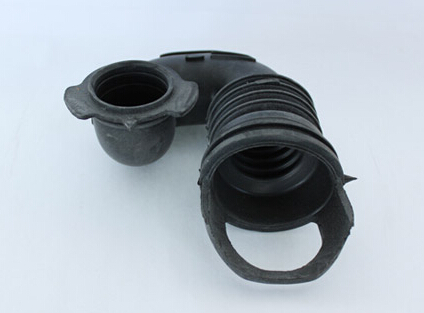
Appliance rubber hoses are the characteristics of rubber. With excellent impact strength, high mechanical strength and rigidity, and good long-term cooperation, the unique combination of load carrying capacity and creep resistance is characteristic of the rubber family. In addition, all types of rubber exhibit excellent dimensional stability, good chemical and heat resistance, surface hardness, and light weight (low specific gravity).
These materials plastically yield to high stresses, so the elongation at break is rarely noticeable in the design; a part can usually bend beyond its elastic limit without breaking, although it does pressure wash white. Although not generally considered flexible, ABS parts have enough spring to accommodate the snap fit requirements. Covers a wide range of mechanical properties. Most of the supply of appliance fittings to water pipe manufacturers distinguish the type of impact strength and manufacturing method (extrusion or molding) based on the type. Some compounds have a particularly superior property such as high heat deflection temperature, abrasion resistance, or dimensional stability.
What do you know about the characteristics of home appliance rubber hoses?
Release time:
2016-04-14